
Two Directions, One Decision: How We Help Clients Find Their Style
Most of our clients don't walk in with a Pinterest board and a fully formed vision. They walk in knowing something needs to change — and trusting us to help them figure out what.
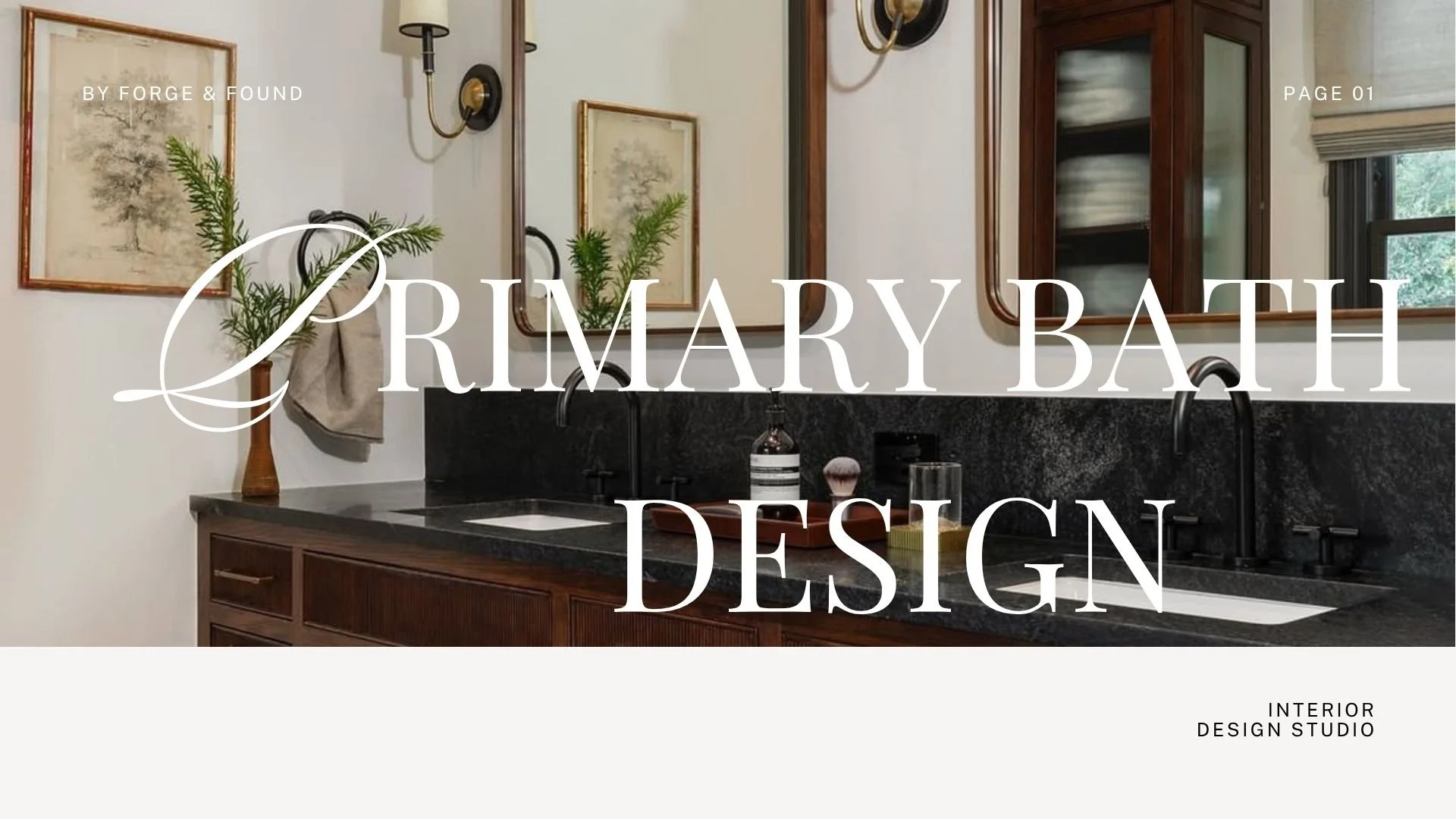
When this client came to us, he had one clear thing to say: he was ready for a real bathroom. Beyond that? A blank slate. No preferred color palette, no style references, no strong opinions about tile. Just a beautiful older Portland home, a primary bath that hadn't been touched in decades, and an openness to something better.
That's actually one of our favorite places to start.
The design-build process isn't just about executing a vision — it's often about helping someone discover what their vision is. When a client comes in without preconceived ideas, we get to do real design work: reading the home, reading the person, and building two distinct directions that let them see themselves in the space before a single tile is ordered.
First, the Structural Recommendation
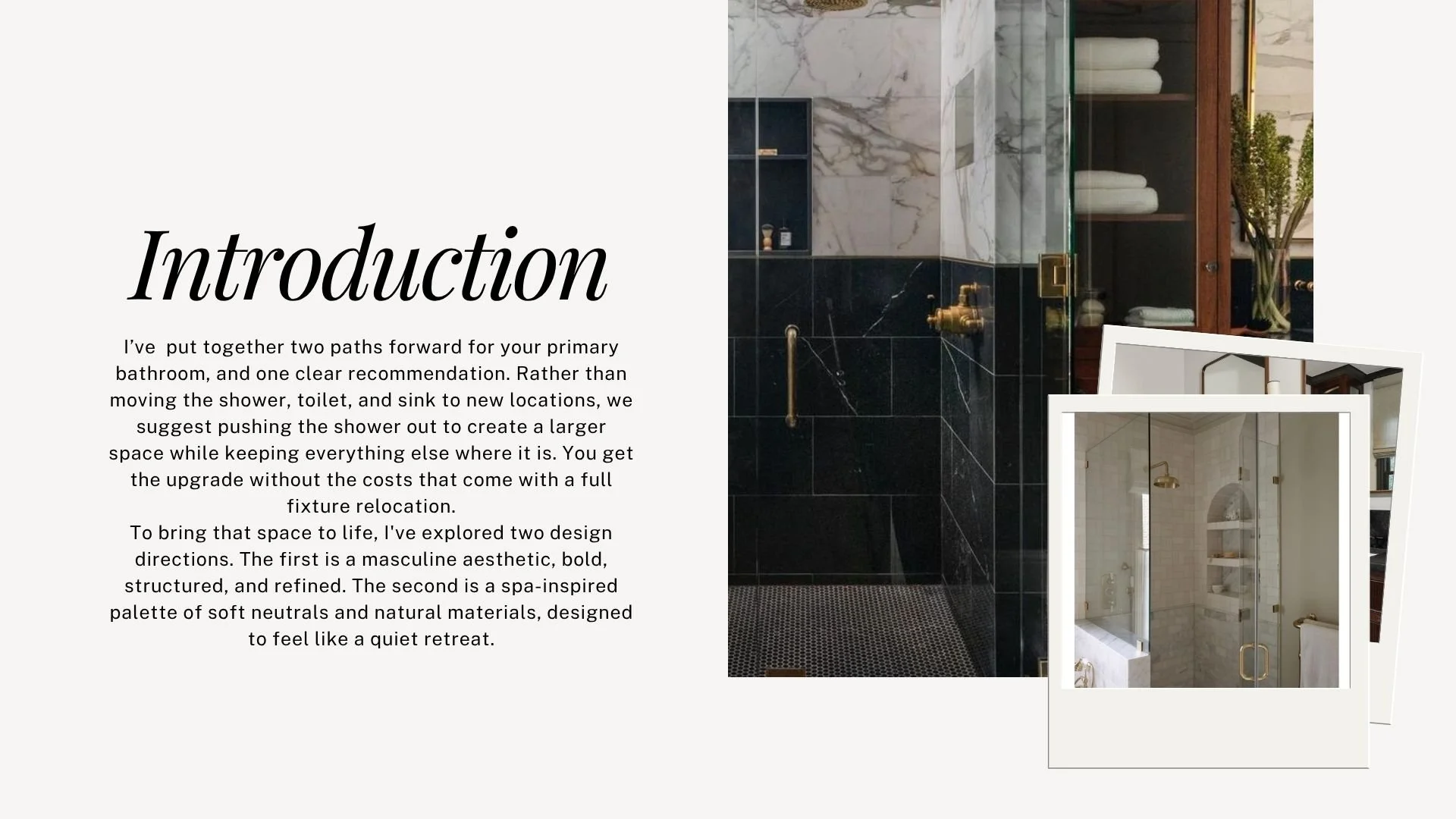
Before we ever got to aesthetics, we looked at the layout. The existing shower, toilet, and sink were all serviceable in their current positions — moving them would mean rerouting plumbing, tearing into walls, and a significantly higher budget with limited visual payoff.
Our recommendation: push the shower out to gain square footage and create a more generous, spa-caliber enclosure, while leaving everything else in place. You get the upgrade — the drama, the function, the daily luxury of a proper shower — without the costs and timelines that come with a full fixture relocation. Smart design means knowing which battles to pick.
Two Directions, Built for Him
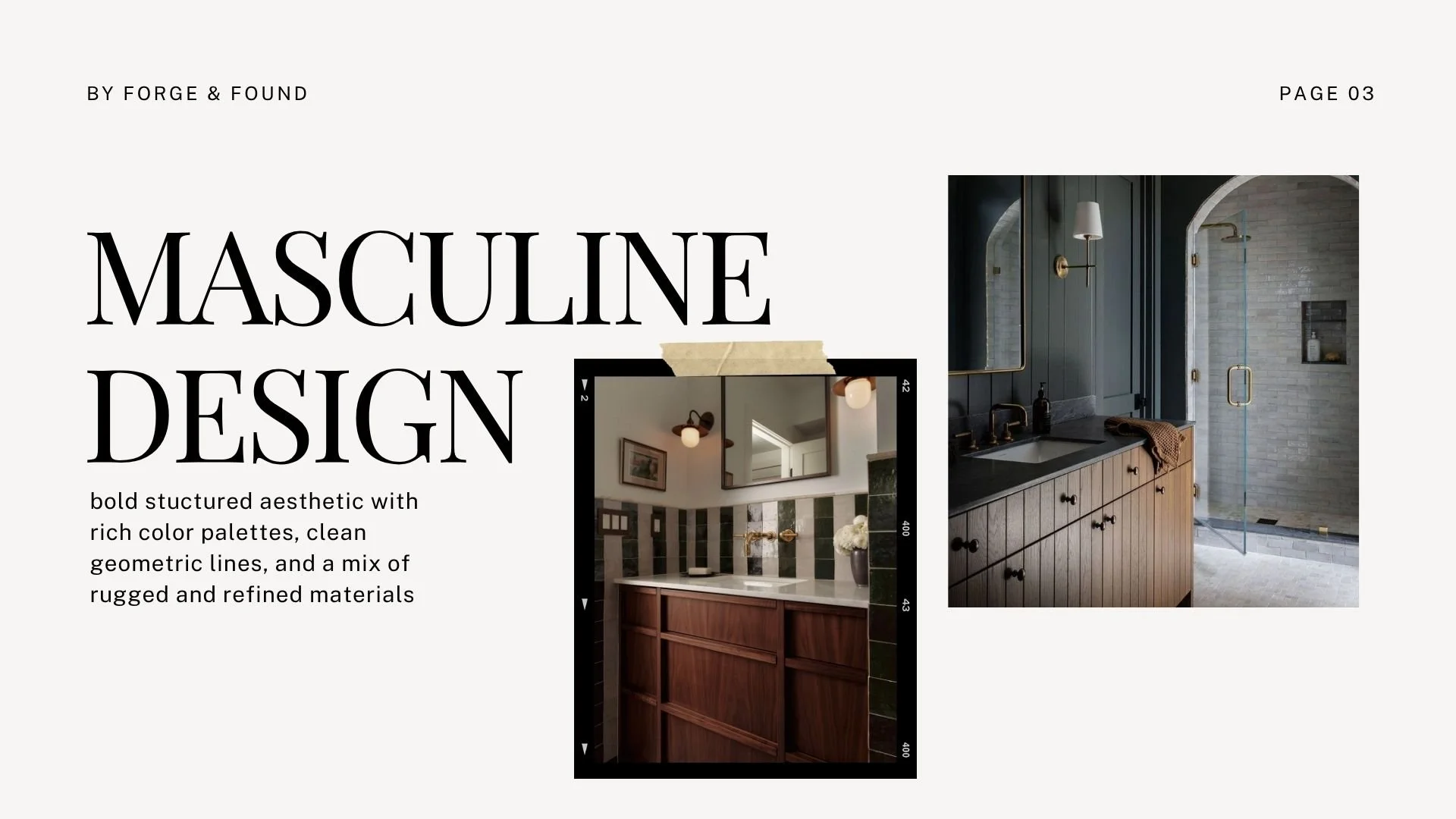
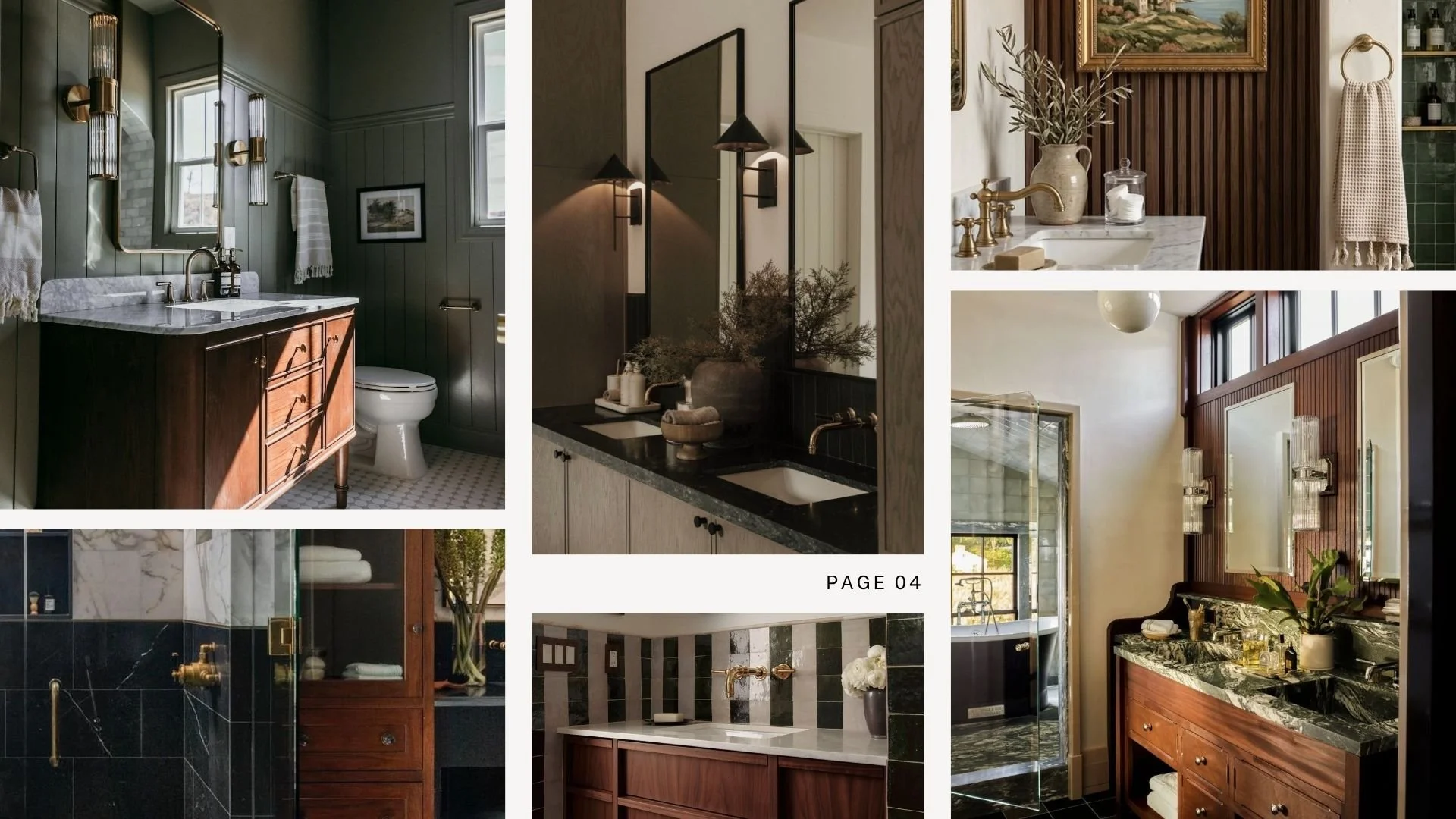
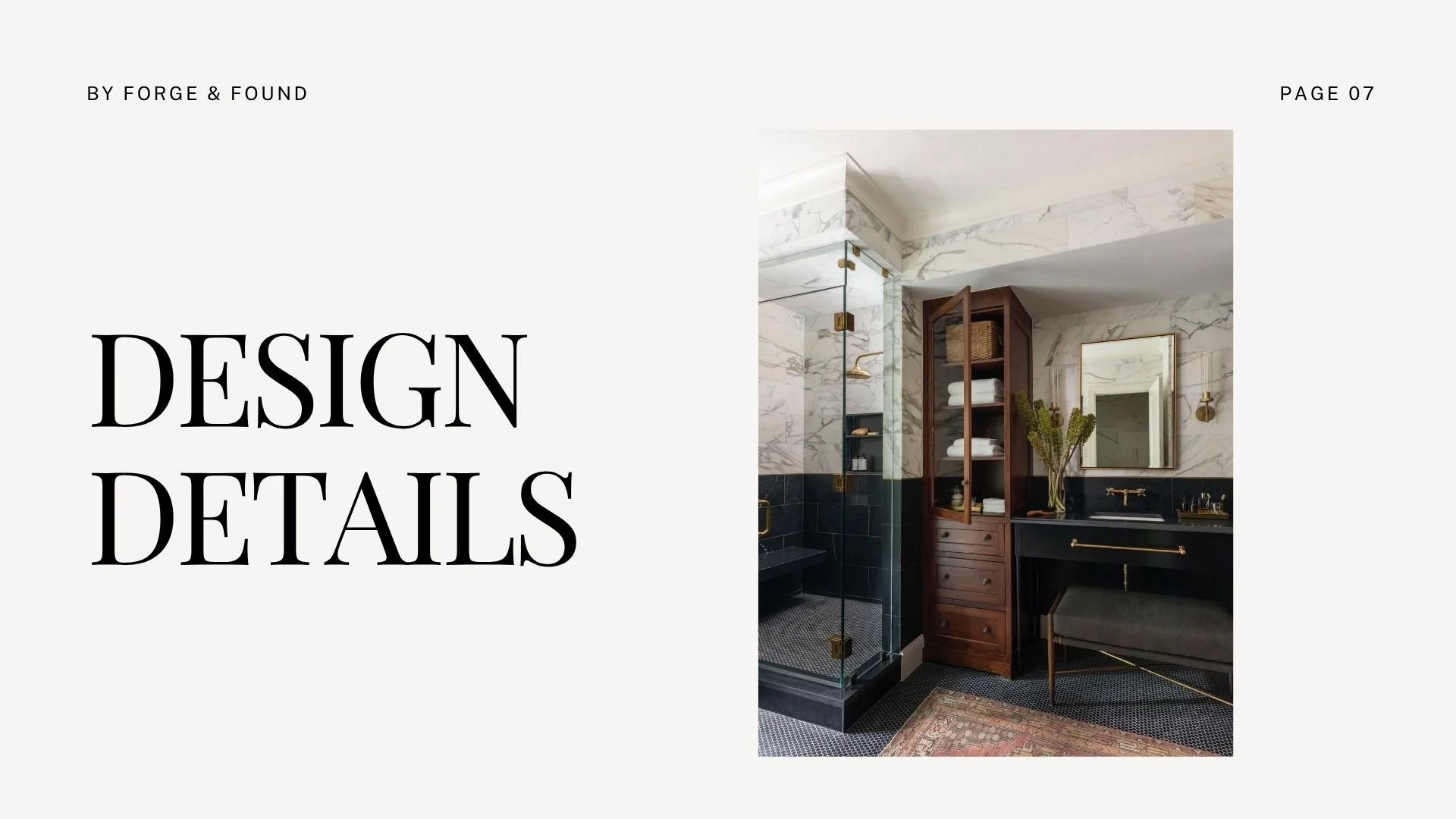
With the structural direction set, we moved into design. We developed two distinct aesthetics — not as equal options with no preference, but as two genuinely considered directions based on the home's character and our read of the client. Either would be exceptional. The difference is in what kind of exceptional he wanted to live with every day.
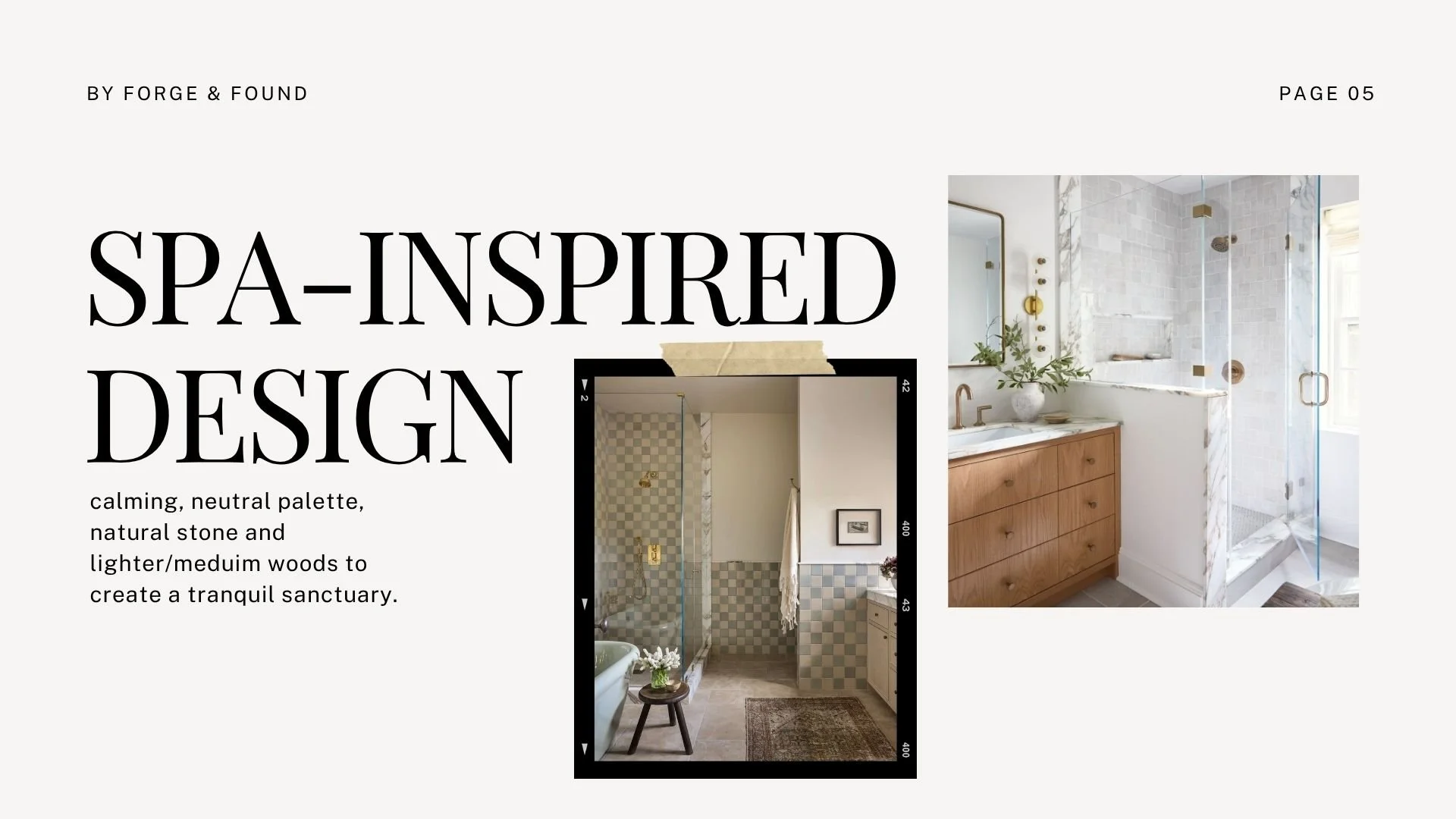
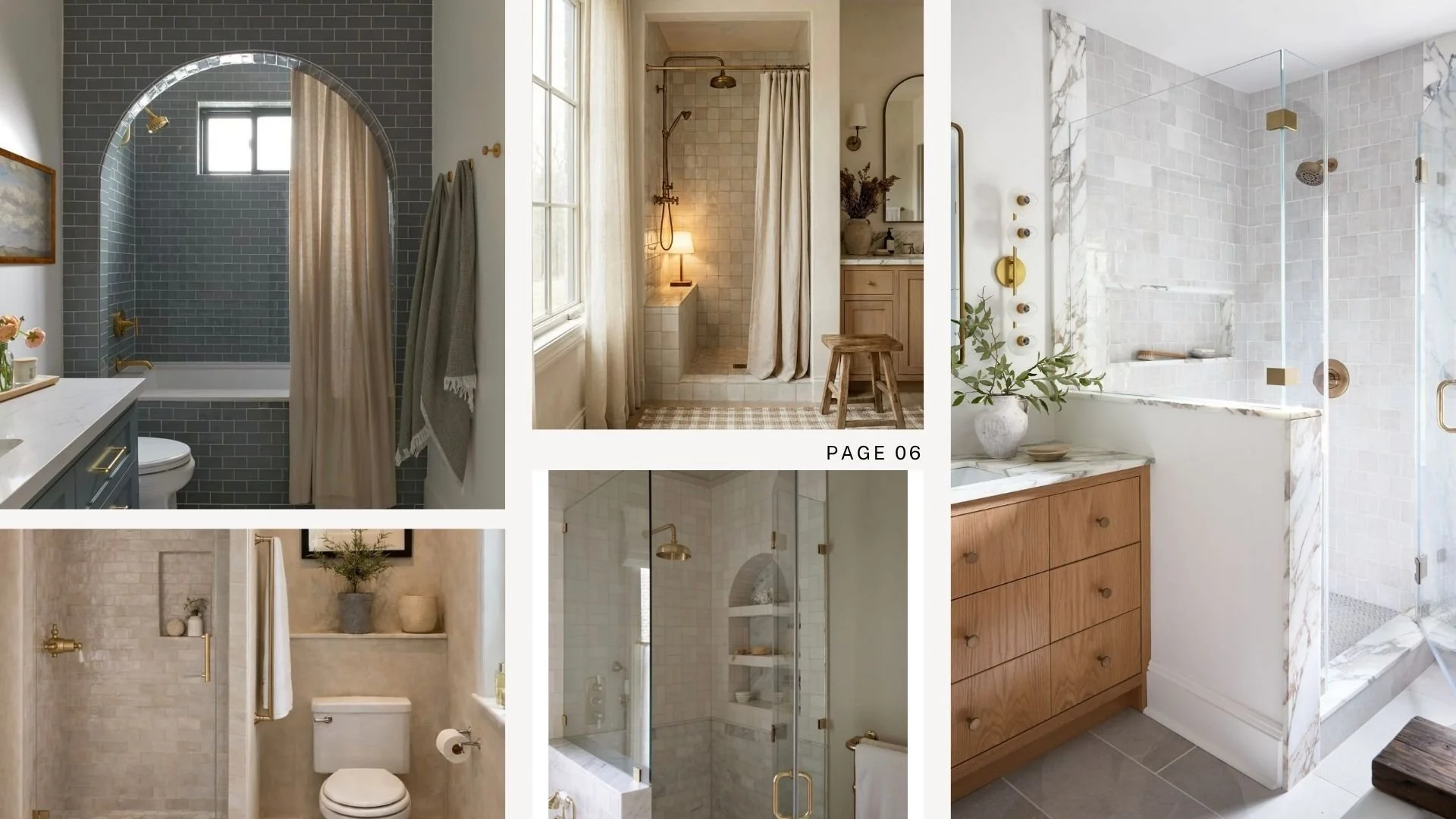
The Part Most People Don't Realize
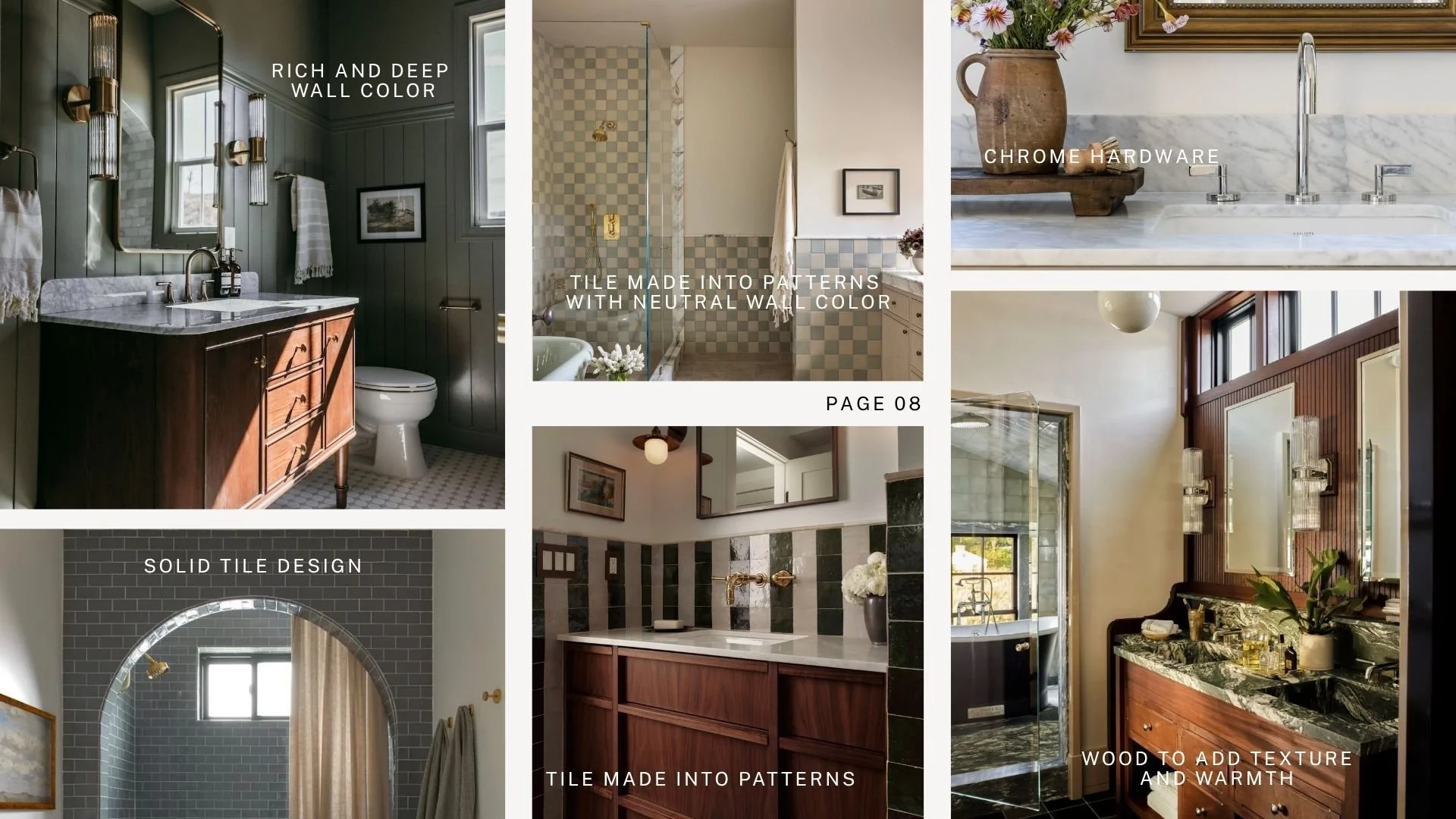
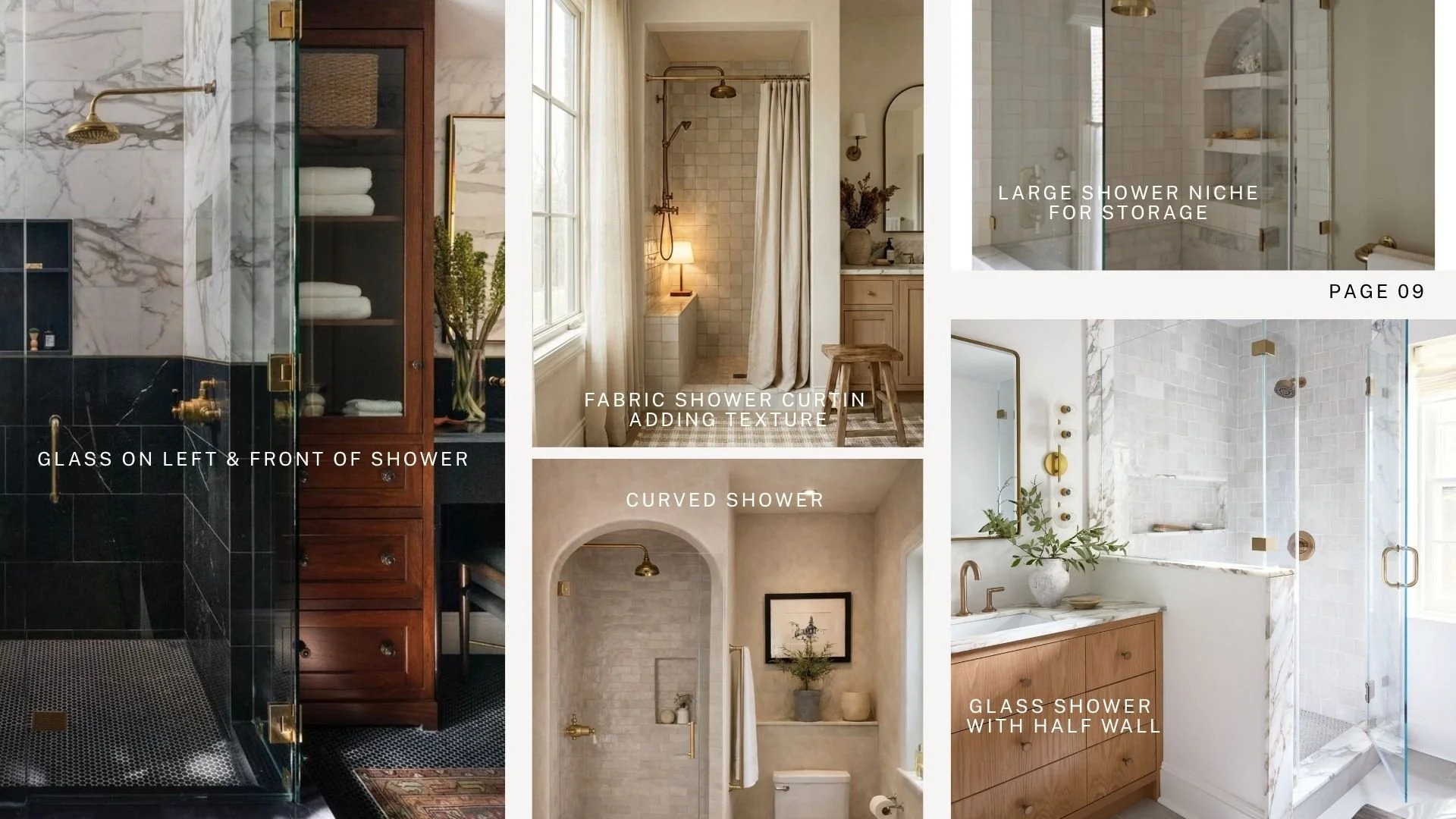
Here's something we make a point of showing every client: the elements within each direction aren't locked in. Tile choices, hardware finishes, vanity wood tones, shower enclosure style — these are all decisions that can shift without abandoning the overall direction.
Want the masculine palette but with a fabric shower curtain instead of frameless glass? That works. Want the spa direction but with a curved shower arch for a softer architectural moment? Absolutely. The design direction is a framework, not a cage. Our job is to help you understand what's loadbearing to the aesthetic — and what's flexible.
For this client, that meant walking through the moodboards side by side, identifying which elements he responded to most viscerally, and then layering in the details that would make the space feel personal rather than catalog-perfect.
Why This Approach Works
Presenting two directions isn't a way of avoiding a decision — it's a design tool. When a client sees two fully developed aesthetics side by side, they learn something about themselves that they couldn't have articulated in a consultation. Something clicks. They find themselves defending one option over the other, or picking elements from each, or realizing that what they actually want is a hybrid that neither direction fully captured.
All of that is information. All of it moves the project forward.
A blank slate client isn't a harder client — they're often the most rewarding. Because when the design lands, it landed through a real process. They didn't just approve something someone else liked. They found something that's genuinely theirs.
If you're thinking about a bathroom remodel and you don't know where to start — that's okay. That's exactly where we like to begin.